Keeping Families Together Through Advocacy, Healing, & Holistic Support
We Believe Families Are Worth Fighting For
SFAC stands with children, parents, and families through some of life's most difficult moments, protecting rights and relationships, supporting healing and reunification, and helping families build lasting stability.
Families Belong Together

Children, and even adults, don’t simply long for a loving family. They long for the people they love to be healthy, safe, and whole.
We believe families deserve the opportunity to heal, grow stronger, and remain connected whenever safely possible. And when separation occurs, families deserve meaningful support on the path toward healing and reunification.
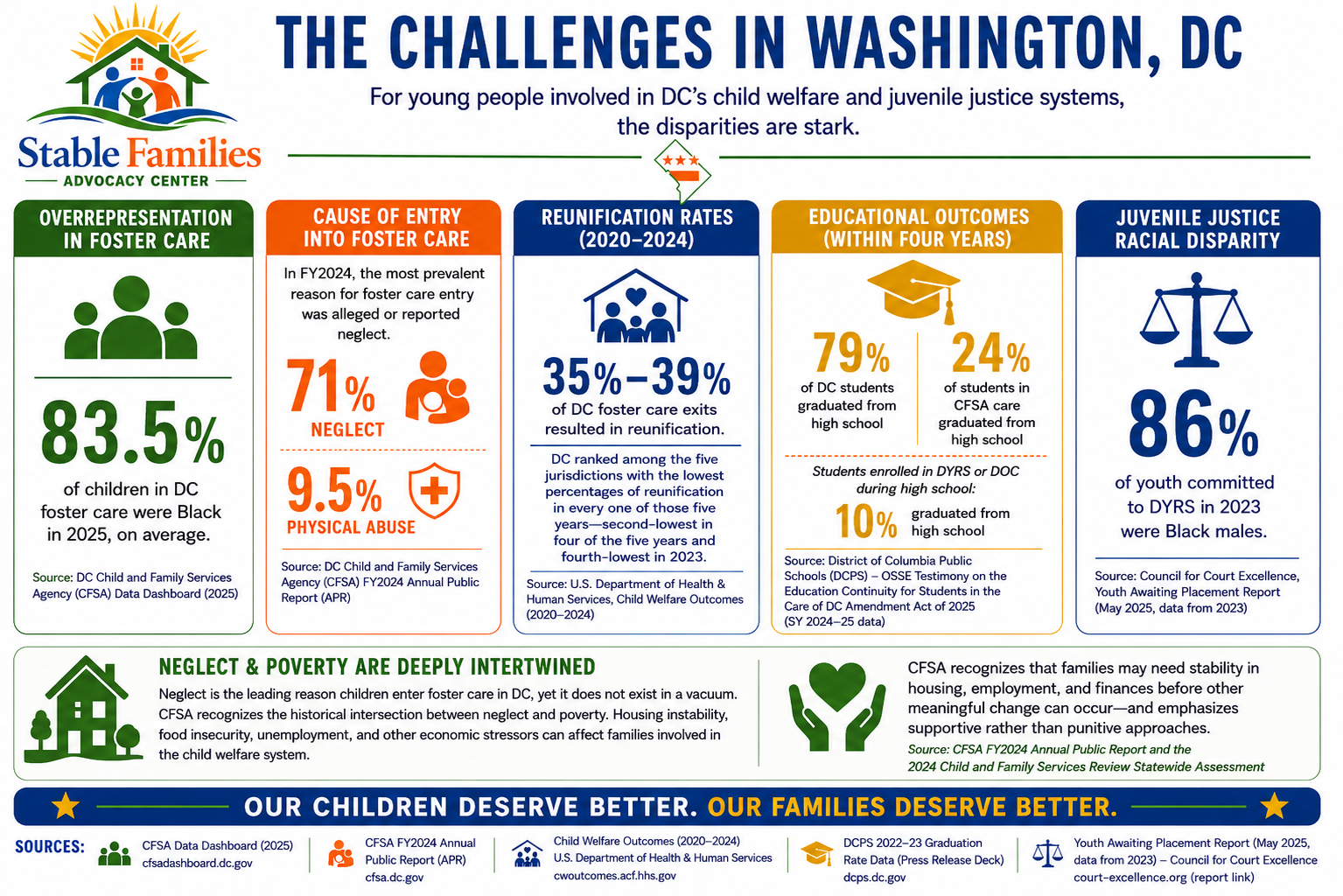
Why DC Needs a Different Approach
Families involved in the child welfare and juvenile justice systems often face complex challenges that no single system can address alone. When families lack access to the advocacy, relationships, and support they need, the consequences can be profound: family separation, disrupted education, deeper system involvement, and lasting instability.
A Different Approach to Family Advocacy:
Backed by Evidence
We combine legal advocacy, social work, wellness services, therapeutic support, and parent partnership to provide families with coordinated, healing-centered support.
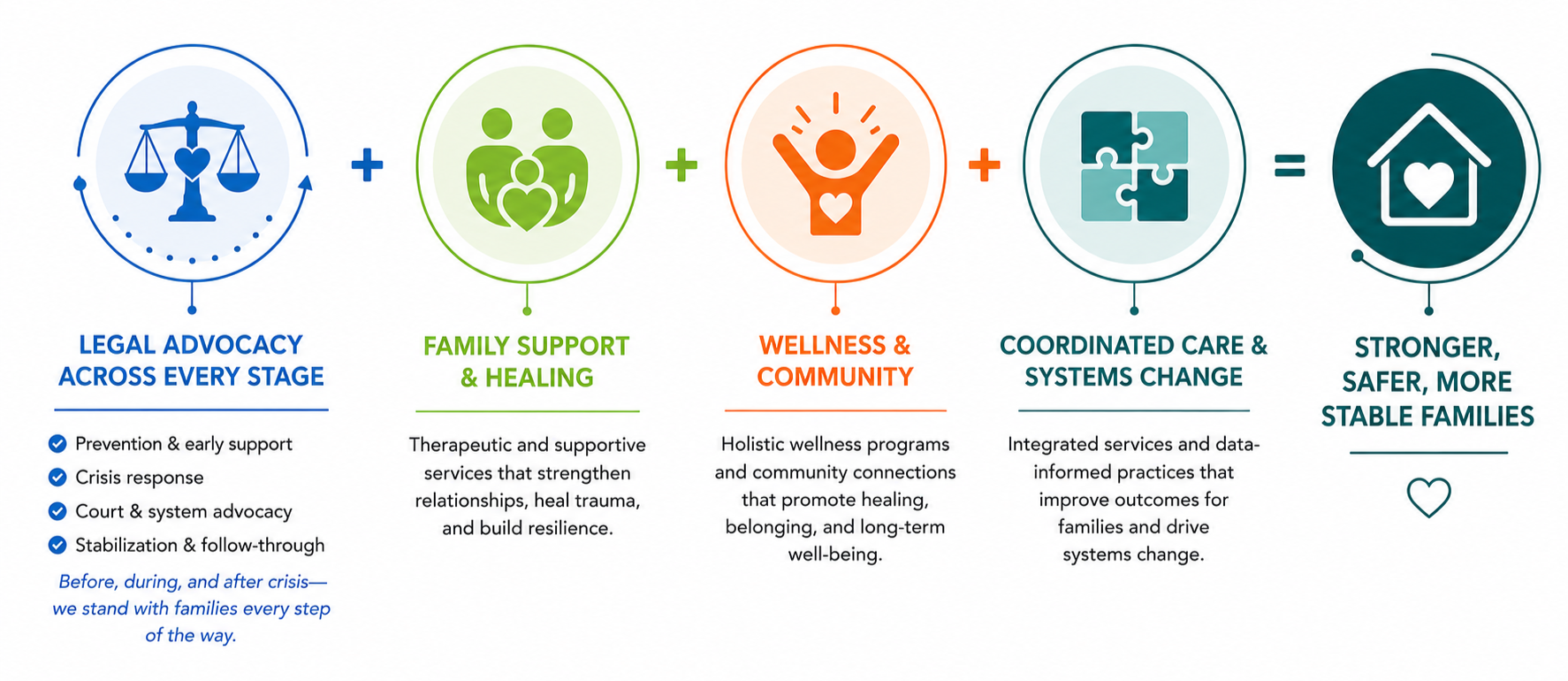
Research demonstrates that when families receive coordinated advocacy and support, outcomes improve. Interdisciplinary models help families achieve greater stability, reduce unnecessary system involvement, and create lasting pathways toward healing and connection.
Our vision for impact:
Stronger Families
Increased Stability
Reduced System Involvement
Improved Self-Advocacy
Healing & Wellness
Community Connection
Sustainable Reunification